
Scientific Viability, Moral Legitimacy, and the Ethics of Biotechnological Deployment
Oct 06, 2026By Declan Li
San Marino High School | Caltech Demirer Laboratory

Abstract
Biofertilizers built on natural nitrogen fixation have been developed, tested, and validated as viable alternatives in today's agriculture, yet occupy an almost negligible share of a present market still dominated by the Haber-Bosch process. The standard explanation for this tragedy is economic: limiting factors such as shelf-life, yield reliability, and integration costs can prevent the expansion of this technology. However, these explanations aren't nearly sufficient: even a perfect biofertilizer would deploy, but in the same manner synthetic fertilizers did a century ago, without anyone having asked if it should. The industry has an excellent vocabulary for asking whether a technology works, but none for whether it ought to deploy. Drawing upon Kierkegaard, it diagnoses this condition as a structural feature of the industry, rather than a lapse of intent: current evaluative questions are inherently aesthetic, asking only whether something works, not if it ought to be deployed. The root of this error is the inherited assumption that viability entails moral legitimacy, but this is only true when those benefiting also bear the costs, a scenario that is rarely the case. Correcting this means treating moral legitimacy as something structurally prior and distinct from viability. The paper achieves this by proposing a legitimacy threshold, grounded in Jonas's inversion of the burden of proof and Kant's principle of publicity, that is administered by a hybrid body and enforced through a binding veto in order to prevent the deployment of technology that inflicts severe and irreversible consequences on those who cannot consent.
Perhaps one of the most influential progressions in human technology was the invention of the Haber-Bosch process. The breaking of diatomic nitrogen molecules and transforming them into plant-available ammonia at an industrial scale allowed food to be produced at a volume capable of feeding roughly half of the world's population now. However, this process is not close to perfect as it consumes nearly one to two percent of global energy output (Kyriakou et al., 2020), contributes substantially to greenhouse gas emissions, and leaches harmful chemicals into waterways. The process that sustains half of the world is slowly killing the conditions under which we continue to be sustained.
Certain types of bacteria fix nitrogen naturally and participate in soil relationships that synthetic fertilizers actively degrade. Biofertilizers that are built on this sustainable mechanism have been developed, tested, and validated in multiple controlled settings. But this technology may never deploy at a scale where they would matter. The standard explanation is a combination of current limitations in biofertilizers themselves and the economics of agriculture. But even if a perfect, economically viable fertilizer were to hit the markets, it would deploy in the same way its predecessors did: on their strength of working and selling, with no one asking who it is for and what it will really cost.

This paper argues that while low adoption of biofertilizers is a market problem, that problem sits atop a deeper one that is philosophical. Currently, the industry evaluates technology on how it sells and performs, treating those statistics as sufficient reason to deploy a product. It was under this exact framework the Haber-Bosch process was delivered, and will likely be the same framework used for products in the future. This failure becomes visible at the market gap in the biofertilizer industry; the failure itself lies in how the industry decides what can be deployed at all. The conflation of viability and legitimacy is a structural feature of how the industry has organized itself in the status quo. This paper will attempt to name that structure, diagnose where it came from, and propose a solution to correct it.
The Hidden Cost of Haber-Bosch
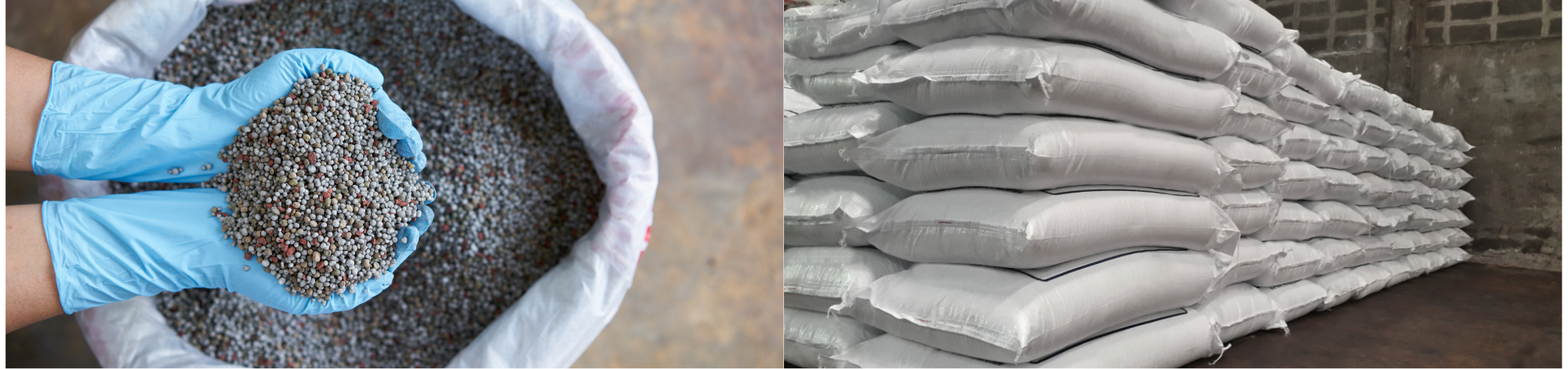
What is currently being used by the biggest chemical fertilizer companies (Nutrien Ltd., Yara International ASA), the Haber-Bosch process, was developed in the early 20th century by the German chemist Fritz Haber and scaled to industrial production by Carl Bosch. Today, it accounts for the synthesis of around 150 million tons of synthetic ammonia every year (Fernandez & Hatzell, 2020). Smil (2001) estimated that without such a system, current agriculture could support only about half of the world's population; more recent work puts the figure at 48 percent of the global population fed on crops grown with synthetic fertilizer (Gao & Cabrera Serrenho, 2023; see also Erisman et al., 2008). The other half that relies on chemical fertilizer to grow the food they eat is only alive because of a chemical reaction that requires temperatures of 400°C, pressures of 300 atm, and continuous feed of natural gas. The product is fertilizers used to grow plants, but also nitrous oxide. In fact, the application of this kind of synthetic nitrogen to soil is the single largest anthropogenic source of N₂O (nitrous oxide) (Tian et al., 2020), a greenhouse gas 273 times more potent than carbon dioxide (IPCC, 2021). Even worse, much of the nitrogen from these types of fertilizers are able to escape crop uptakes and leach into our waterways, poisoning the water we drink and causing algal blooms that devastate coastal ecosystems (Diaz & Rosenberg, 2008). These types of fertilizers also destroy naturally occurring symbiotic relationships between plants and the bacteria, mycelium, and other microbes that live in the soil.


The Alternative Already Exists
And the alternative to chemical fertilizers is not a hypothesis. Certain genera of bacteria fix atmospheric nitrogen through the enzyme nitrogenase, converting N₂ into bioavailable forms like ammonia without extensive resource consumption. Certain soil bacteria, such as diazotrophs of the genus Azotobacter, live and fix nitrogen freely in the soil, providing ammonia to plants naturally rather than synthetically. Research globally over the past three decades has extended our knowledge on such organisms and provided formulations which demonstrate efficacy in controlled trials across numerous crops and growing conditions.
Despite this information, biofertilizers only occupy a narrow portion of the existing market. Of a global fertilizer market valued at USD 144.50 billion in 2024, chemical fertilizers accounted for USD 141.97 billion (Fortune Business Insights, 2026). Adoption rates among farmers remain only a niche in comparison to global agriculture. The infrastructure, supply chains, and economic motives that are needed for a significant shift from synthetic to biological fertilizers simply do not exist. The Haber-Bosch process is embedded in input supply chains farmers depend on, and synthetic fertilizers deliver predictable yields where biofertilizers can vary with weather and other conditions. These are real constraints, and they genuinely explain why adoption is low.

But this by itself is not a sufficient answer. Economic friction may be able to explain why adoption is low right now, but it cannot explain why the adoption of biofertilizers ought to be accelerated, by what means, and to whose benefit. It does not explain why the current evaluative framework applied to technology development at every stage is organized entirely by metrics of performance and not at all around obligations. The case also exists that a product can face market backlash and still be the subject of serious moral questioning about deployment. The biotechnology industry has already conflated market and moral concerns, proving to be a structural feature of how this industry thinks. This problem requires a philosophical explanation.

An Aesthetic Industry
It's not to say that the people in this industry are completely indifferent to ethics. In fact, most researchers, members behind projects, investors, and management would describe themselves as motivated by a genuine desire to help people. The real problem lies in the structure of the industry itself, operating under a specific mode of scientific inquiry that cannot generate ethical questions. In order to understand why this happens, one can turn to the works of Danish philosopher Søren Kierkegaard.

In Either/Or, Kierkegaard stages a confrontation between two opposing ways of viewing the world (Kierkegaard, 1843/1987). The first volume gives us the perspective of the aesthete, those who orient themselves towards what is possible and gratifying, without subjecting any of those possibilities to a moral criterion. The second volume gives the thoughts of Judge William, who argues, through a metaphor of marriage, that the ethical life is entirely separate from the aesthetic one (Kierkegaard, 1843/1987, p. 271). It is a reorientation of the framework itself, where the ethical individual recognizes an obligation that binds them apart from what the present moment happens to make desirable or achievable. The lesson of the marriage metaphor applies directly to the biotech industry. It is clear that the type of operating questions the agricultural biotech industry asks are aesthetic. At almost every stage of creating a product, the questions asked are those of possibility and performance, but not of obligation. The ethical questions are structurally absent.

This paper does not claim that biotech researchers are aesthetes in the pejorative sense, but that the institutional and incentive aspects within which they operate have already been organized around inherently aesthetic questions and not around mechanisms that would force ethical questions to be asked. A scientist who wanted to ask whether their technology ought to be deployed has neither a formal process for doing so nor any reward for it. The biotech industry did not invent this framework, however, it inherited this sin.
Viability Is Not Legitimacy
There has been a long tradition in commercial civilization that it is acceptable to treat material benefit as its own form of moral justification. In fact, the logic is familiar enough to become invisible; many people have ingrained in their reasoning that if something yields a net positive, it must be good. This is very pragmatic because to any reasonable person, this issue has been dressed up in the language of progress so long that the moral questions that need to be asked are difficult to locate and properly address.
The core of this tradition is the assumption that viability is the same as legitimacy. This inference is only true when those who capture a technology's benefits are the same party that absorbs any costs, though this is rarely ever the case. In practice, it tends to be the firm that sells the margin, while the smallholder has their land depleted, and the generation that receives the immediate benefits is not the generation that inherits environmental devastation. This clear asymmetry is what breaks this assumption. A technology can be viable in every industry sense while remaining completely illegitimate, because the people who actually bear the consequence are structurally excluded from the decision that imposed them. In fact, evaluative frameworks are built by parties who are positioned to gain, and those who stand to lose are, by construction, absent. The question of who bears the costs is never asked because nothing in existing structures requires anyone to ask it.

But what a technology, whether working or not, is actually for is the other question that needs to be asked. Aristotle understood that an object's excellence cannot be separated from its purpose (Aristotle, trans. 1908, 1097b). A biofertilizer that fixes nitrogen is not yet a good biofertilizer until you know exactly whose field it was designed to serve, whether it actually serves them well, and what the cost of serving them was. And these are prior questions, they must be answered before development and deployment, not after the deed is already done.

Jonas and the Imperative of Responsibility
In 1979, in the shadow of the Green Revolution, Hans Jonas published Das Prinzip Verantwortung, later translated into English as The Imperative of Responsibility (1984) (Jonas, 1979/1984). During this time where technology had outpaced the ethical frameworks that were available to evaluate them, he observed that the scale and reach of technology had changed in ways that traditional ethics were not able to effectively be applied to them. When the consequence of an action spans across generations, the moral frameworks created to be applied to village life became the wrong instrument entirely that is applied to a problem it was never originally designed to address.

Jonas's response was to rebuild ethics from a foundation of responsibility, one understood not as accountability after the fact, but as an orientation toward future consequences that must shape the action before it. From this, Jonas derived what he called the heuristics of fear, where the consequences are uncertain and large enough that the burden of proof must shift (Jonas, 1979/1984, p. 24).

The standard assumption in technological development is that we should allow a product to continue to progress until it starts doing harm. Jonas inverts this by arguing that if potential consequences of a product are severe and irreversible, the burden shifts and now falls on the technology itself to justify its deployment. This turns the process of determining whether something proceeds into deliberation that seriously takes into account the voice of those who cannot speak for themselves in the moment.
If biofertilizers are deployed at scale, they will alter the microbial ecology of the soil they are in over the course of millennia. They will also restructure the economic relationships between fertilizer manufacturers and chemical suppliers and distributors and farmers in ways that will be difficult to reverse once established. None of this means that biofertilizers ought not be deployed, but it demonstrates that the questions of whether something ought to be deployed cannot be answered using the same framework designed to answer whether they work. Jonas's question asks a far narrower one that reflects prior decisions about what kinds of consequences count and whose experience of impacts are relevant to the conversation.
While Kierkegaard successfully identifies where the industry is going wrong, Jonas adds a mechanism to the diagnosis. Jonas specifies what the obligation the industry needs actually requires: inverting the burden of proof, and building that into development and deployment as a fundamental formal condition. This is the point where the proposal becomes costly to today's industry. The inversion of burden that Jonas proposes directly contrasts the status quo and will have to start off whilst under the pressures of existing mechanisms. Unforgiving timelines, expectations from investors, and the overall competitive dynamic of innovation are all good reasons as for why a transition will not be smooth. A company that is expected to demonstrate that a technology serves people whose need motivated deployment before development, left to their own devices, most likely won't. The publication record does not reward the researcher who chooses to pause to find whether what they have spent multiple years developing will actually reach the farmer whose name the grant was originally for.

A Legitimacy Threshold
The existing gap requires structural correction, specifically a unique legitimacy threshold to be satisfied by a technology before its deployment. This threshold is how the technology would be deemed morally justified, being separate from regulatory approval and logically coming prior to it. This way, the new legitimacy threshold can be distinct from similar steps in today's industry. Regulation assesses whether a technology is safe and legal, and while these are legitimate concerns, some technology can pass these assessments and still be illegitimate. An environmental impact assessment can determine the effects of deployments, however it does not consult any parties who stand to absorb these costs, and whether they object to it. In other words, regulation in industry gives a company permission, but having a threshold for legitimacy gives justification. And because the latter is only important before the technology hits consumers and goes into the soil, it must come before, not after or alongside traditional regulatory assessment.

A legitimacy threshold could be as simple as a set of questions that must be answered honestly before deployment proceeds. But what makes this threshold a real solution can be found in a principle Kant articulated in Perpetual Peace: any maxim which cannot survive being made public is unjust (Kant, 1795/1996, 8:381). Therefore, the test is not whether the intentions are good by some rubric, but if it could be stated aloud to the parties it affects without defeating itself. These must be asked in advance rather than reconstructed after the fact:
1. Who benefits from this technology, and are these the people whose need the technology was originally made for?
2. What are the reasonable foreseeable costs, to whom may they land upon, and have those parties been properly consulted?
3. What is the technology optimized for, and is it the right solution to this problem?
4. Who bears the risk in the case of failure at scale, and have they consented to bearing it in that event?
These are institutionally inconvenient questions because honest answers will likely complicate deployment decisions that the existing framework had allowed and facilitated.


The proposed threshold needs a hybrid holder. Hybrid in the sense that the firm must answer the questions on record, but an additional, independent body will have the authority to act on the answer provided on record. This allows for separation from existing aesthetic self-assessment in the industry. Taken alone, Jonas's heuristics of fear can only warrant a power to delay deployment while demanding justification. In order to have real authority, a deontological veto can be instated so that where a deployment imposes severe and irreversible damage on parties who have not consented and cannot, it is impermissible regardless of its promised benefits. Jonas is able to supply the recognition that scale and irreversibility change the moral context, and the veto provides the power to prevent that recognition from being traded.
Testing the Threshold
A kind of threshold as this is only meaningful if it would have made a difference, but honest if it had imperfections. Considering asbestos, its costs were clearly overwhelming on workers and their families, who were never consulted and without the option to refuse; the benefits of it, however, were grossly accumulated by manufacturers and builders. Answering the four questions would have surfaced this asymmetry decades before litigation did, and a veto would have successfully been applied to avoid the disaster asbestos created. But now consider mRNA vaccines. The deployment of it was rapid, with long-term consequences barely considered and left genuinely uncertain. The risk it bore would fall upon a population with no meaningful mechanism to consent. In such a case, a body applying the threshold strictly would have likely delayed or blocked the deployment of a technology which saved millions of lives. This shows how the threshold's power heavily depends on where the line of severe and irreversible is drawn, a line which the framework does not draw for you.

Beyond Fertilizer
Nothing in this paper is specific to fertilizer. The distributive asymmetry, the publicity test, and the inversion of the burden of proof make no mention of nitrogen or soil, but rather describes deployment evaluated by viability alone. Agricultural biotechnology simply offers the clearest view, but this same structure governs decisions in medicine, artificial intelligence, and any field where a technology's reach outruns the framework meant to judge it. The proposed threshold here is meant to travel, though what it demands of any particular domain are questions unique to the domain itself.

Science has done what it can do, and consulting the structures of philosophy, translated into real world action, can make genuinely good change more prevalent. The solution is a different framework, one that treats the question of moral legitimacy as its own distinct question that comes before the question of scientific viability. Only then will this crucial step be baked into the structure of the process rather than leaving it to the conscience of individuals moving in one direction only to be ignored again and again.
References:
Aasfar, A., Bargaz, A., Yaakoubi, K., Hilali, A., Bennis, I., Zeroual, Y., & Meftah Kadmiri, I. (2021). Nitrogen fixing Azotobacter species as potential soil biological enhancers for crop nutrition and yield stability. Frontiers in Microbiology, 12, 628379. doi.org/10.3389/fmicb.2021.628379
Aristotle. (1908). Nicomachean ethics (W. D. Ross, Trans.). Clarendon Press. (Original work published ca. 350 B.C.E.)
Diaz, R. J., & Rosenberg, R. (2008). Spreading dead zones and consequences for marine ecosystems. Science, 321(5891), 926–929. doi.org/10.1126/science.1156401
Erisman, J. W., Sutton, M. A., Galloway, J., Klimont, Z., & Winiwarter, W. (2008). How a century of ammonia synthesis changed the world. Nature Geoscience, 1, 636–639. doi.org/10.1038/ngeo325
Fernandez, C. A., & Hatzell, M. C. (2020). Economic considerations for low-temperature electrochemical ammonia production. Journal of the Electrochemical Society, 167(14), 143504.
Fortune Business Insights. (2026). Fertilizers market size, share & industry analysis, by type, by form, by mode of application, by crop type, and regional forecast, 2025–2032 (Report No. FBI114571). fortunebusinessinsights.com
Gao, Y., & Cabrera Serrenho, A. (2023). Greenhouse gas emissions from nitrogen fertilizers could be reduced by up to one-fifth of current levels by 2050 with combined interventions. Nature Food, 4, 170–178. doi.org/10.1038/s43016-023-00698-w
Intergovernmental Panel on Climate Change. (2021). Climate change 2021: The physical science basis. Contribution of Working Group I to the Sixth Assessment Report of the Intergovernmental Panel on Climate Change. Cambridge University Press.
Jonas, H. (1984). The imperative of responsibility: In search of an ethics for the technological age. University of Chicago Press. (Original work published 1979)
Kant, I. (1996). Toward perpetual peace: A philosophical project. In M. J. Gregor (Ed. & Trans.), Practical philosophy (pp. 311–351). Cambridge University Press. (Original work published 1795)
Kierkegaard, S. (1987). Either/or (H. V. Hong & E. H. Hong, Trans.). Princeton University Press. (Original work published 1843)
Kyriakou, V., Garagounis, I., Vourros, A., Vasileiou, E., & Stoukides, M. (2020). An electrochemical Haber-Bosch process. Joule, 4(1), 142–158. doi.org/10.1016/j.joule.2019.10.006
Smil, V. (2001). Enriching the earth: Fritz Haber, Carl Bosch, and the transformation of world food production. MIT Press.
Tian, H., Xu, R., Canadell, J. G., Thompson, R. L., Winiwarter, W., Suntharalingam, P., Davidson, E. A., Ciais, P., Jackson, R. B., Janssens-Maenhout, G., Prather, M. J., Regnier, P., Pan, N., Pan, S., Peters, G. P., Shi, H., Tubiello, F. N., Zaehle, S., Zhou, F., . . . Yao, Y. (2020). A comprehensive quantification of global nitrous oxide sources and sinks. Nature, 586, 248–256. doi.org/10.1038/s41586-020-2780-0