
Why Language Matters in a STEM Driven World
Feb 04, 2026
Abbas Shakir
In a world increasingly driven by STEM, it’s easy to assume that language and the humanities are just background tasks.
But let me ask you all something: what good is a scientific breakthrough if no one understands it? What good is technological advancement if it goes beyond our shared boundaries and starts to do more harm than good?
This is where language and the study of humanities come in. These disciplines have trained us to think with nuance, to question our own narratives, to understand our audience and persuade with purpose, but also to honor ethics, and to fight for justice. When utilized wisely, words and humanities can definitely transform minds, and yes the world too.
At the base level, language changes the way we perceive the world around us. As STEM students this is a skill I don’t even have to mention is important.
In AP Psych, we learned about the Sapir-Whorf linguistic-determinism hypothesis which discusses how the structure of a language can literally shape the speakers perception and categorization of their world. Not only does this give us new ways to think about the same concept, but it helps us expand our field of view. In STEM, we prize precision. But precision without a bigger picture risks tunnel vision.
Therefore, thinking about what truth actually is, though it may seem cheesy and further from reality, is necessary. That’s where philosophers like Bertrand Russell come in. In Appearance and Reality, he argues that what we take for self-evident facts like a table being rectangular is actually a mental construct that’s built on sense-data filtered through language. “Perhaps there is no table at all” he says. But he goes on to say that philosophy might not answer our questions but it does encourage us to ask more questions. And thus, we can see how the humanities teach us to spot the blind spots.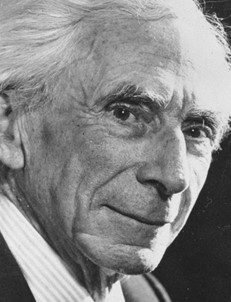
Now, language isn’t just about thinking or talking, it’s about moving people to action. And that power to persuade is what makes language dangerous, but also deeply necessary.
We’d like to think that science reveals truth. And that’s correct. But here’s the twist: science holds that power only through language. Language can shape how that truth lands… or if it lands at all.
In The Truman Show, Truman lives in a fake world. Everything is scripted and controlled. He only starts to break free when he begins to question things around him, especially the language and demeanor of people close to him. 
Language can actually manipulate memory too. Nowadays global news can be transformed by social media, and if we don’t question stuff like that, we might get a warped view of the world. Even in the smallest things in STEM, this matters. One simple example is about global warming. Is it a “climate crisis”? Or just “climate change”? Those phrases create very different reactions. And so language shapes urgency and belief. If we ignore this, we risk solving the wrong problems or not solving them at all.
And humanities isn’t just for broad or social changes. It’s embedded in our everyday experiences as STEM students as well. In every scientific paper we write, or project we present, we have to persuade our audience by precisely justifying our conclusions, but also being opened minded to feedback and new research. So, language is the bridge between innovation and implementation.
And that brings me to my final point: Language affects ethics. As we create these innovations, we must think about how our solution will affect people in the “real world.” Is the correct path where we help the greatest number of people but at the cost of some people’s happiness, the lens of utilitarianism? Is there only ever one correct answer? And the bigger question might be: who decides these factors?
This is why the humanities matters. In a world where tech, data, and science increasingly shape (or don’t shape…) policies, we need more leaders in STEM who can analyze the language as rigorously as they analyze figures in the papers.